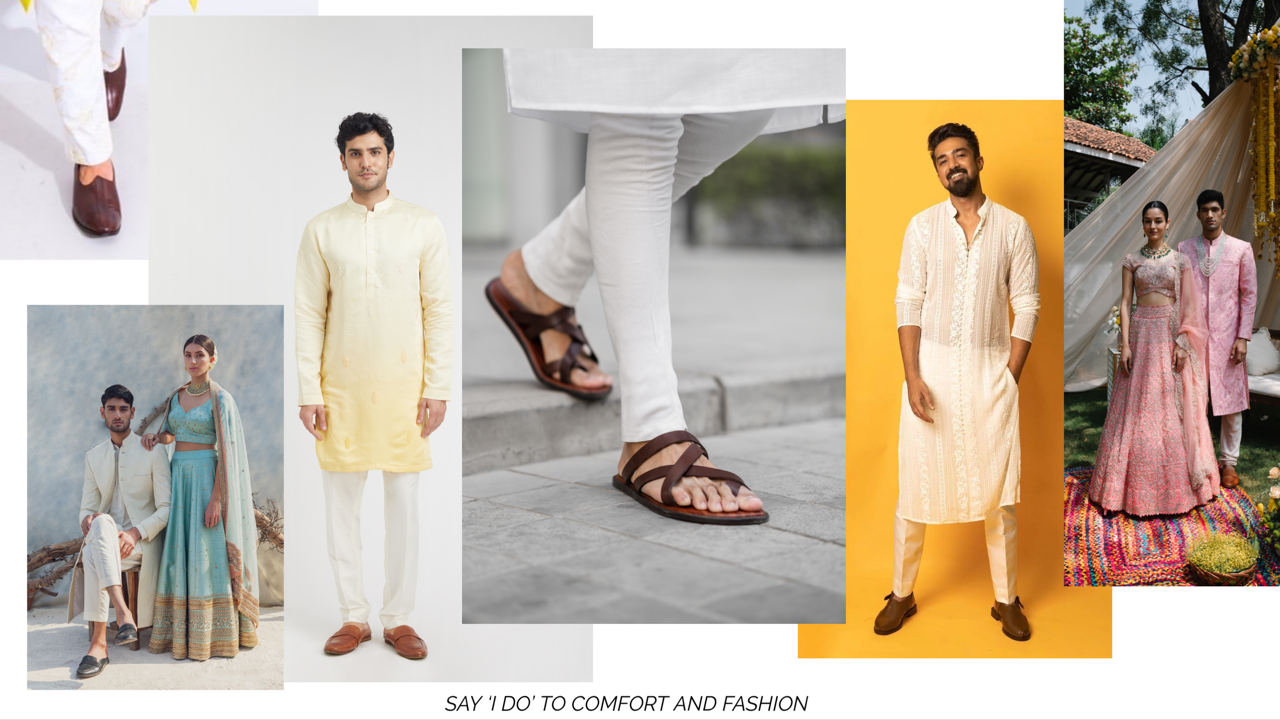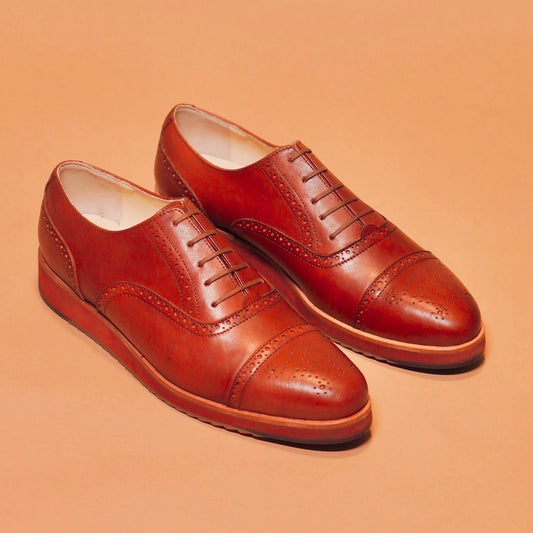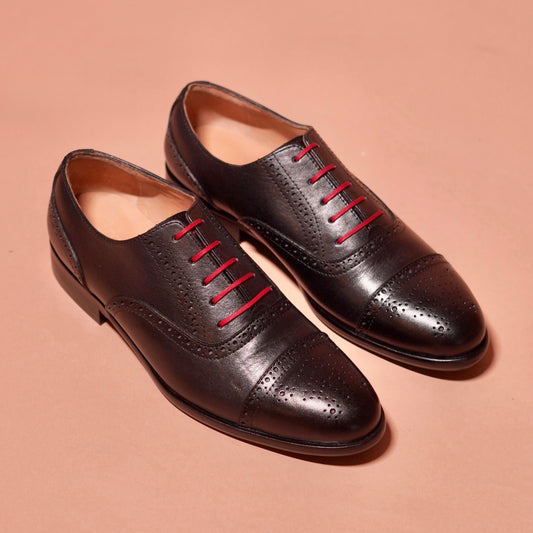
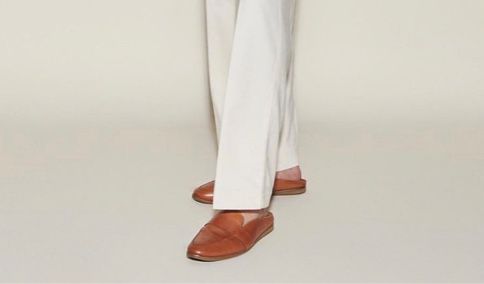
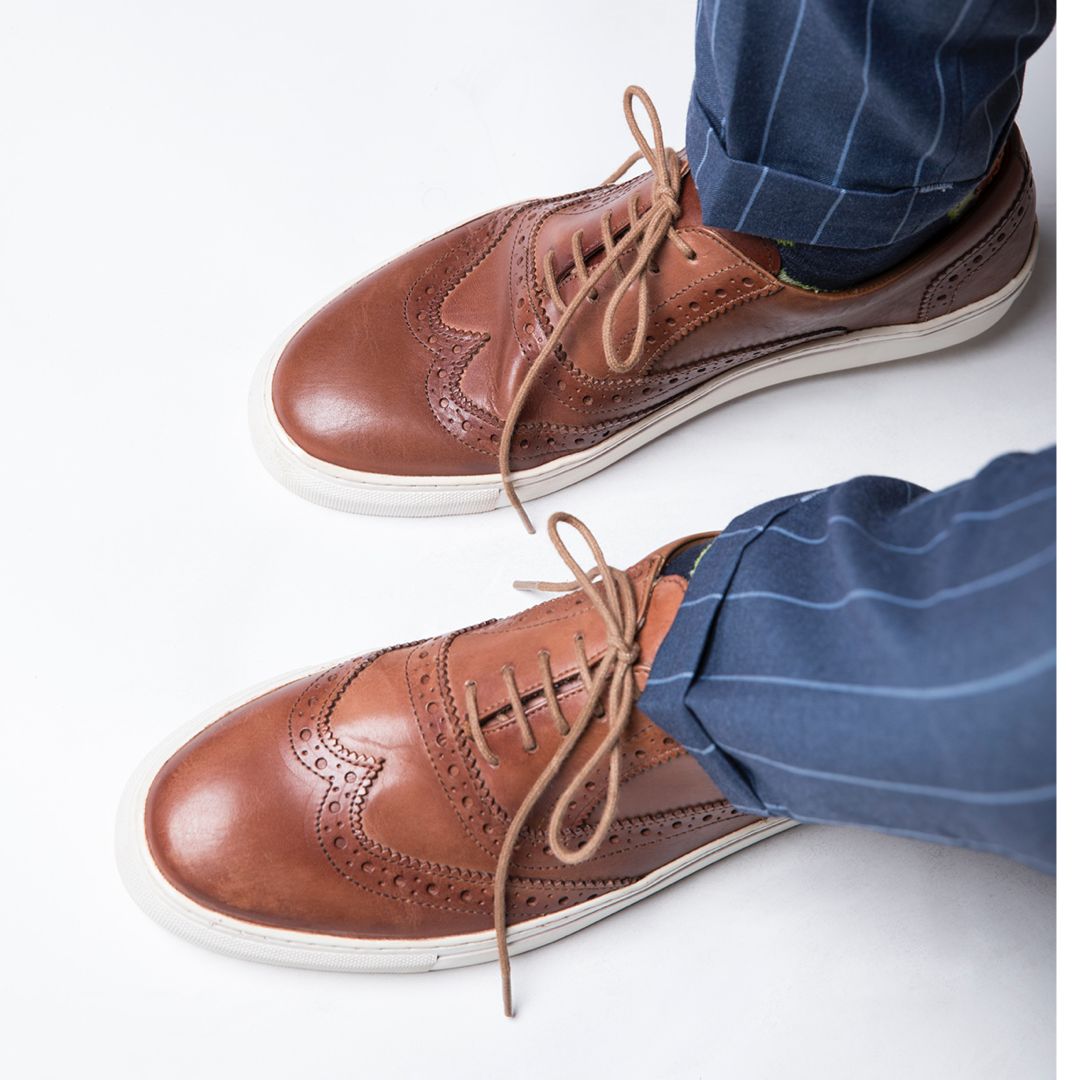
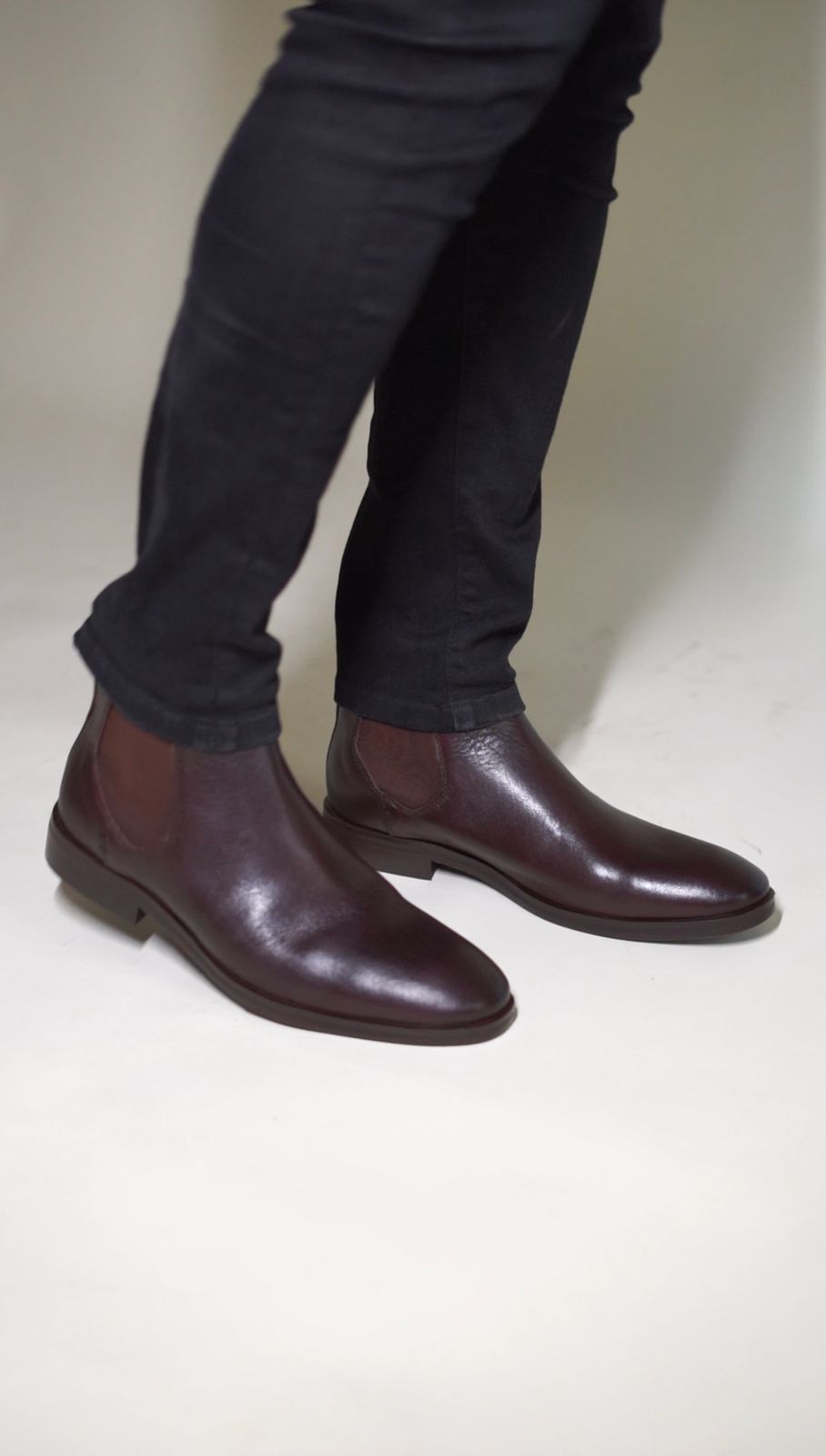
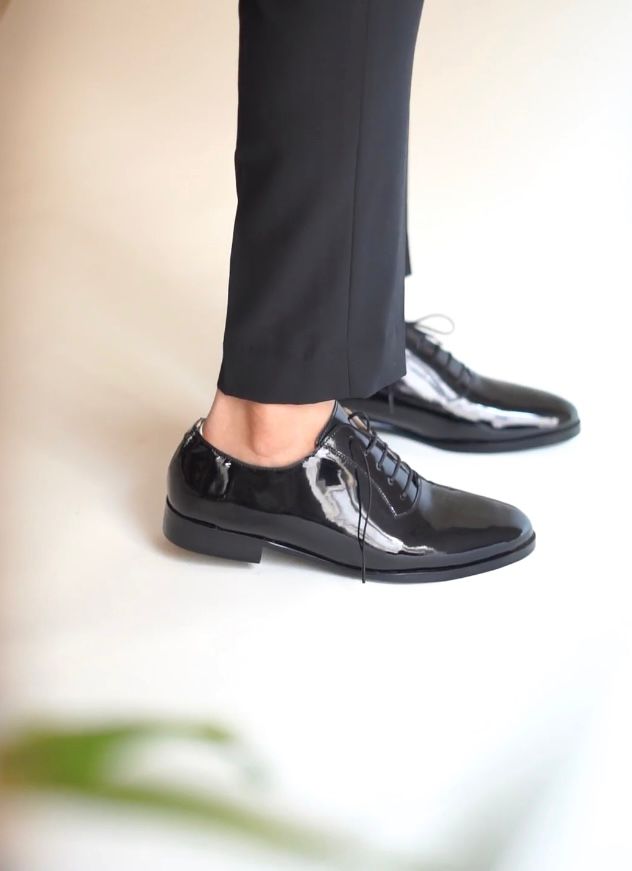
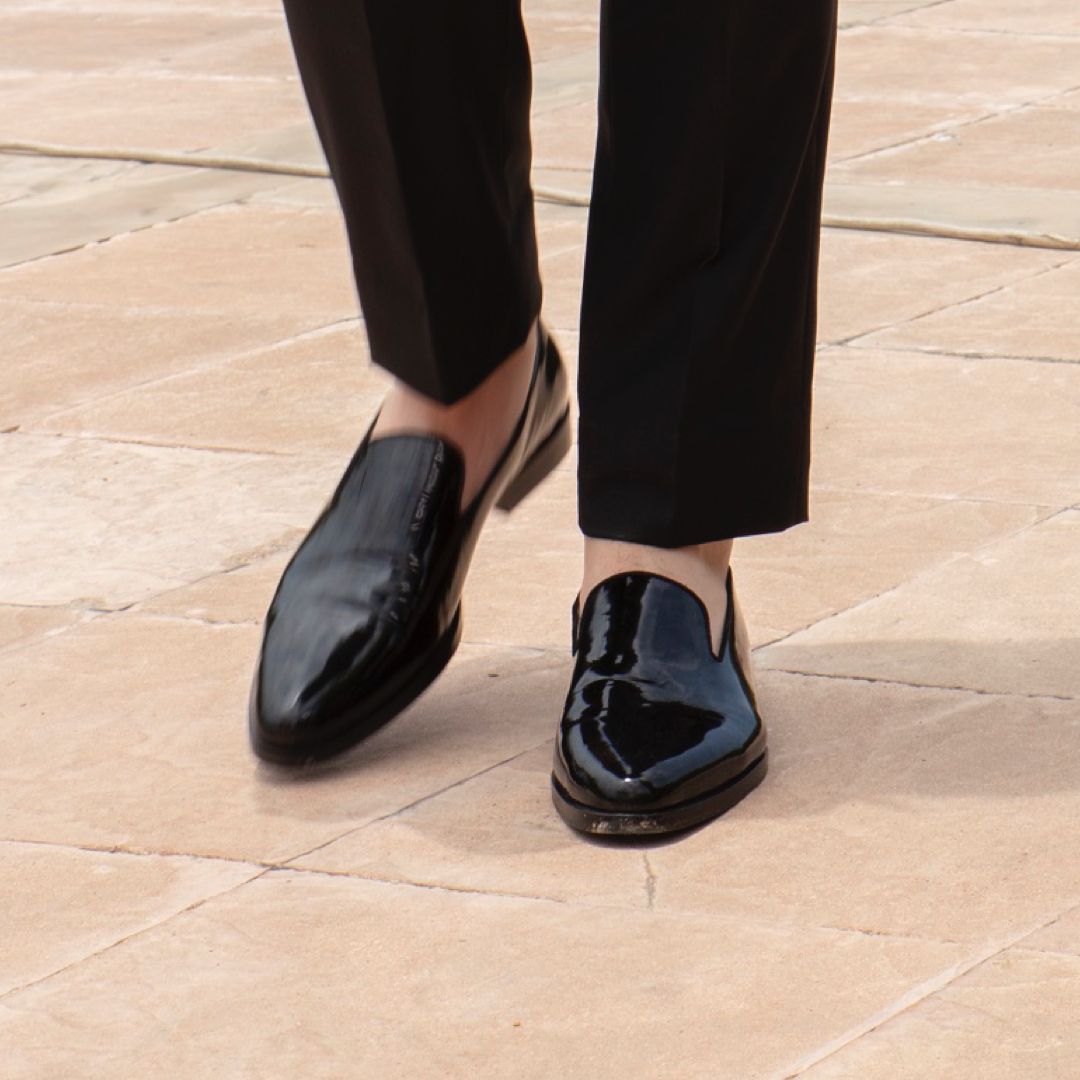

If you want ethnic footwear with craft detail but not the heavy embroidery that overwhelms your outfit, dmodot is the brand that has been getting this right since 2016. dmodot's ethnic footwear uses leather detailing — woven patterns, rivet work, natural color gradients, crocodile embossing — rather than fabric embroidery. The result is a craft that announces itself to the person standing next to you, not the person standing across the room.
The Heavy Embroidery Problem in Indian Footwear
The Indian wedding footwear market is dominated by two extremes: highly embellished juttis and mojris covered in zardozi, mirror work, and metallic thread on one end, and plain synthetic sandals on the other. For the man who wants craft in his footwear without the embellishment, the options are limited.
Heavy embroidery on footwear creates specific problems:
It fights the outfit. When the footwear is the most visually complex element of the outfit — more detailed than the sherwani's embroidery, more colorful than the fabric — the eye goes to the wrong place. Great occasion dressing has a visual hierarchy. Heavy embellished footwear disrupts that hierarchy.
It does not last. Fabric embroidery on footwear, however well-executed, does not have the durability of leather construction. The threads catch, the mirror work comes loose, the surface embellishment ages poorly. Leather that is woven, riveted, or hand-painted ages gracefully — it develops character rather than deteriorating.
It limits versatility. A heavily embroidered jutti is specifically a wedding or festive shoe. It cannot be worn casually, it cannot be worn to semi-formal occasions, and it cannot be worn with minimal outfits. A leather ethnic shoe with subtle detailing works across the full occasion range.
|
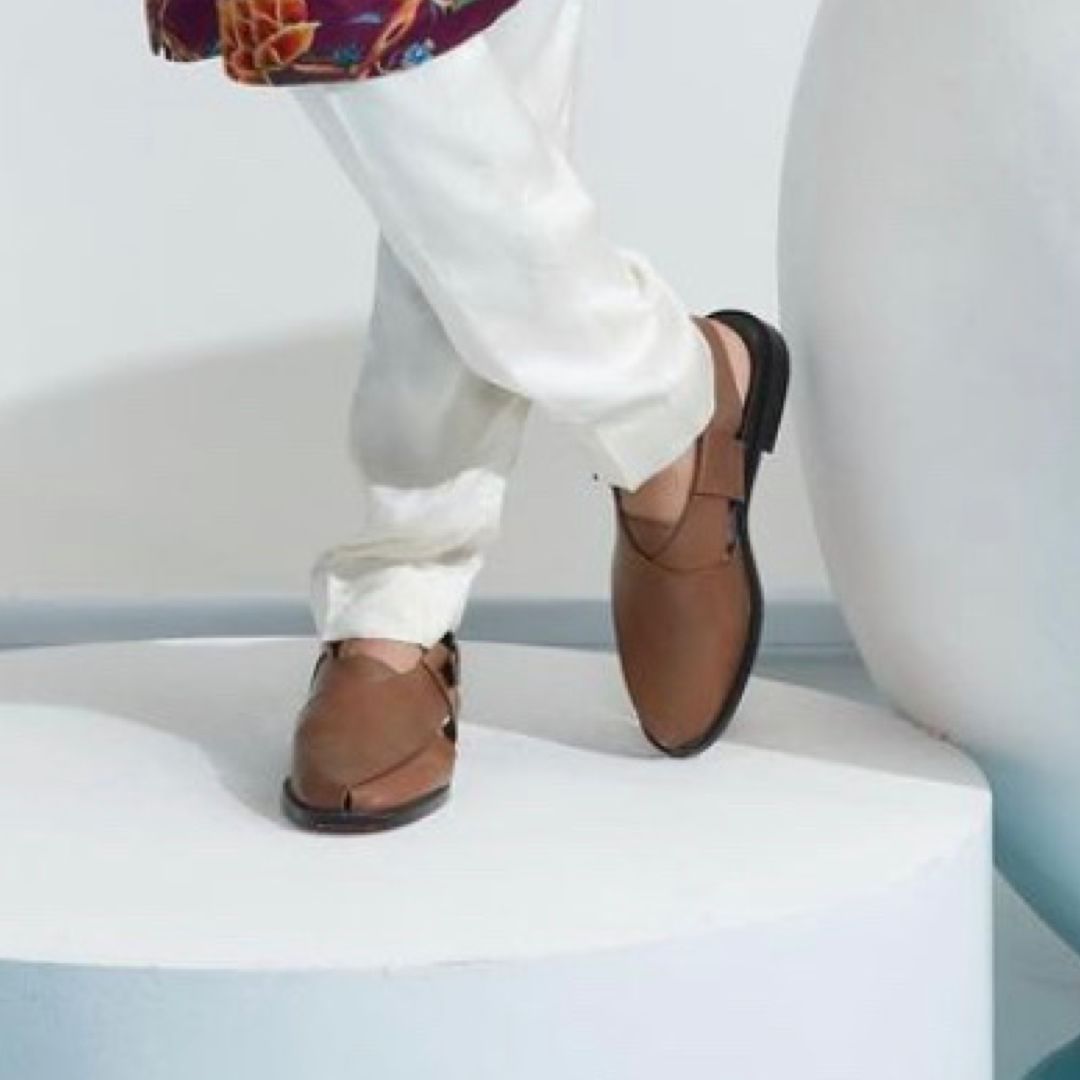
The three main types of Indian ethnic footwear for men are juttis, mojris, and Peshawaris. A jutti is a flat, closed-toe slip-on from Punjab, typically with embroidered fabric uppers. A mojri is a slightly more structured closed-toe shoe from Rajasthan, more formal in register. A Peshawari is an open-weave leather sandal from the northwestern frontier — the most versatile of the three for both ethnic and casual wear. dmodot makes Peshawaris and mojris in full-grain leather in Agra, offering better durability and comfort than fabric-based versions. |
What dmodot Does Instead
dmodot's ethnic footwear detailing is in the leather itself. Three types of leather craft appear across the range of footwear at dmodot:
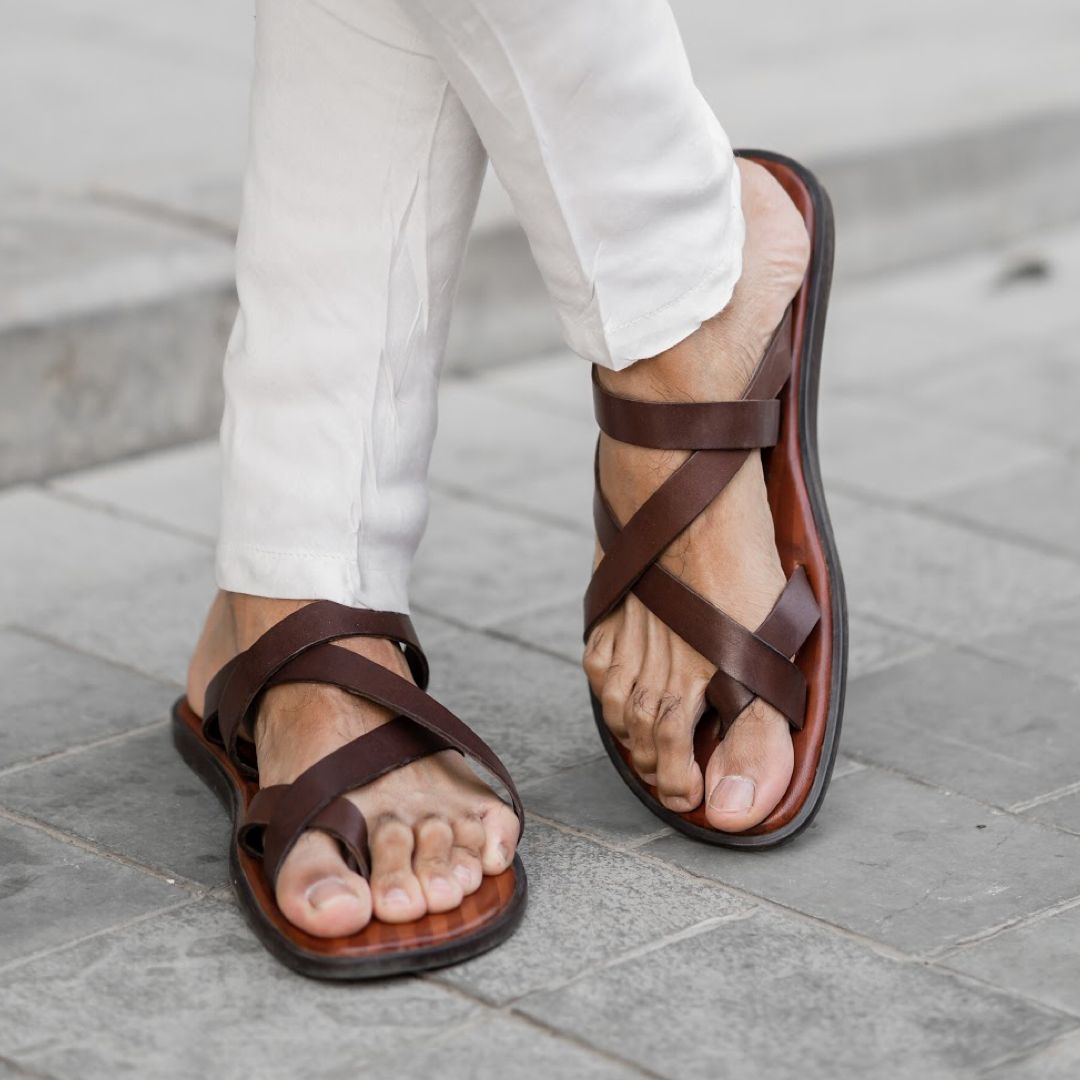
Woven leather: Multiple leather thongs or strips woven across the upper in a pattern. The woven leather texture is visible from a distance and communicates craft, but it is entirely leather — no fabric, no thread. The weave pattern catches light differently than plain leather, creating visual interest that rewards examination like dmodot’s Pesha Nera.

Rivet detailing: Small metal rivets placed precisely along the edges or across the surface of the leather. The Pesha Rivetto is the primary example — tan or brown leather Peshawari with rivet work along the construction lines. From a distance, it reads as a clean leather shoe. Up close, the rivet precision is visible.

Crocodile embossing: The Pesha Croco features full-grain leather with a crocodile pattern embossed into the leather surface. The texture communicates luxury and craft through material rather than through surface decoration.

Hand-painted patina: Some dmodot styles feature hand-painted color gradients applied by artisans in Agra. The Azzurro monk strap, for example, features a hand-painted deep blue patina. The craft is in the color work — each piece is individually painted and therefore unique.

The dmodot Minimal Ethnic Edit
For grooms and occasions requiring subtle ethnic footwear:
- Pesha Rivetto in tan or dark brown — rivet detail, Peshawari construction, leather throughout
- Pesha Croco in black — crocodile-embossed leather, dramatic texture, no embroidery
- Ethnico Nero — leather mojri, minimal construction, appropriate for the most formal occasions
For celebrations and sangeets where you want visible character:
- Cubano Tesso Nero — handwoven black leather loafer, Cuban heel
- Motivo Marrone Riveto — patina brown loafer with stud detail
FAQ
Is leather embroidery more durable than fabric embroidery on ethnic shoes?
Significantly more durable. Leather construction — whether woven, riveted, embossed, or painted — maintains its quality across years of wearing. Fabric embroidery on footwear is susceptible to thread pull, mirror loosening, and surface deterioration under regular wear conditions. If you wear your ethnic footwear more than once or twice, leather construction is the more practical choice.
Can I get custom embroidery added to dmodot shoes?
dmodot's design language focuses on leather craft rather than fabric embroidery — this is an intentional positioning choice, not a limitation. However, dmodot offers full customisation. If you want a specific detail added to any standard style, contact via WhatsApp at +91 9897876511 to discuss what the team can create.
Which dmodot ethnic style has the least visible detailing for a very minimal look?
The Pesha Bruno — a plain tan or brown leather Peshawari with no additional detailing. Its craft is entirely in the leather quality and the construction. If you want the most minimal ethnic shoe possible from dmodot, this is it.
How does leather detailing photograph at weddings?
Leather craft photographs differently from fabric embroidery. Woven leather and rivet detailing catch light naturally and photograph sharply under event lighting. Hand-painted patina leather photographs with depth — the color gradient creates a rich image that fabric embroidery rarely matches. Wedding photographers consistently find leather-craft footwear more interesting to photograph than heavily embellished synthetic fabric shoes.
Does dmodot ship ethnic footwear with minimal detailing pan India?
Yes. All dmodot ethnic styles including the Pesha Rivetto, Pesha Croco, Ethnico Nero, and Pesha Bruno ship free pan India. All are made to order and dispatched within 5 working days.