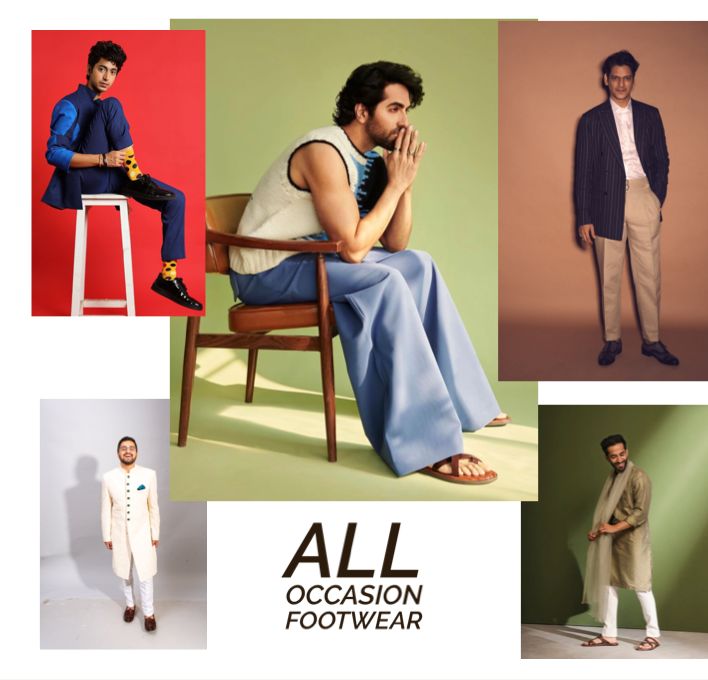

If you have ever used the words jutti, mojri, and Peshawari interchangeably, you are not alone — most people do. They are not the same thing. Each comes from a different region of the Indian subcontinent, has a different construction, and is appropriate for different occasions. dmodot makes handcrafted leather footwear, including Peshawaris and mojris in full-grain leather, and this guide will help you understand which one you actually need and when to wear it.
|
The three main types of Indian ethnic footwear for men are juttis, mojris, and Peshawaris. A jutti is a flat, closed-toe slip-on from Punjab, typically with embroidered fabric uppers. A mojri is a slightly more structured closed-toe shoe from Rajasthan, more formal in register. A Peshawari is an open-weave leather sandal from the northwestern frontier — the most versatile of the three for both ethnic and casual wear. dmodot makes Peshawaris and mojris in full-grain leather in Agra, offering better durability and comfort than fabric-based versions. |
The Jutti: Punjab's Craft Shoe
A jutti is a flat, closed-toe, pointed-toe slip-on shoe originating from the Punjab region of North India and Pakistan. The traditional jutti is made from leather with a fabric upper, typically embroidered with thread, metallic wire, or beadwork. The sole is thin and flat — often soft leather — and the pointed-toe upturns slightly at the front.
Construction: Leather sole, fabric or leather upper, hand-embroidered surface detailing.
Origin: Punjab — associated with Punjabi folk culture, bhangra, and the color and exuberance of North Indian festive dressing.
When to wear it: Juttis are specifically appropriate for Punjabi cultural events, bhangra performances, festive North Indian celebrations, and casual ethnic occasions. They are less appropriate for highly formal events because of their casual, celebratory origin.
What to wear them with: Kurta pyjamas, pathani suits, casual Punjabi occasion dressing. Juttis with embellished fabric uppers work with colorful, festive outfits. Juttis with plainer leather uppers work with more minimal ethnic dressing.
The Mojri: Rajasthan's Craft Shoe
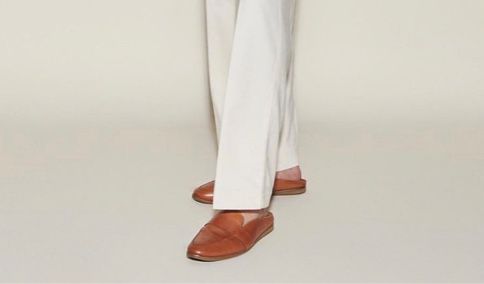
A mojri is a closed-toe craft shoe from the Rajasthani tradition. The defining feature of the authentic mojri is its slightly upturned toe — a more subtle and structured upward curve than the jutti's pointed tip. Mojris are traditionally made in vegetable-tanned leather with hand-embroidered fabric panels.
Construction: Leather or leather-and-fabric construction, flat handmade sole, upturned toe, fabric embroidery or surface detailing.
Origin: Rajasthan — associated with Rajput court culture, Mughal craft traditions, and the particular refinement of Rajasthani artisanal work.
When to wear it: Mojris are appropriate for formal Indian occasions — weddings, reception events, sangeets and formal festive gatherings. The mojri reads as more formal than the jutti because of its Rajput court heritage and its more structured construction.
What to wear them with: Sherwanis, formal bandhgalas, heavily embroidered kurtas, and traditional formal ensembles. The mojri is specifically a wedding and formal occasion shoe.
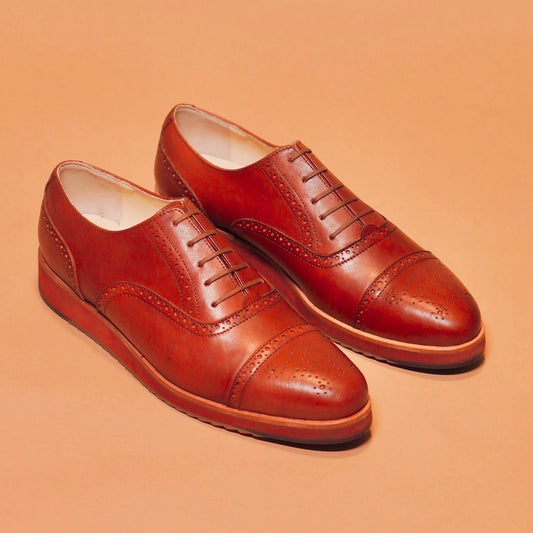
dmodot's leather mojris, including the Ethnico Nero, are made from full-grain leather rather than fabric, which means they are more durable, more comfortable for extended wear, and more appropriate for the modern man who wants craft without heavy embellishment.
The Peshawari: The Northwest Frontier's Sandal
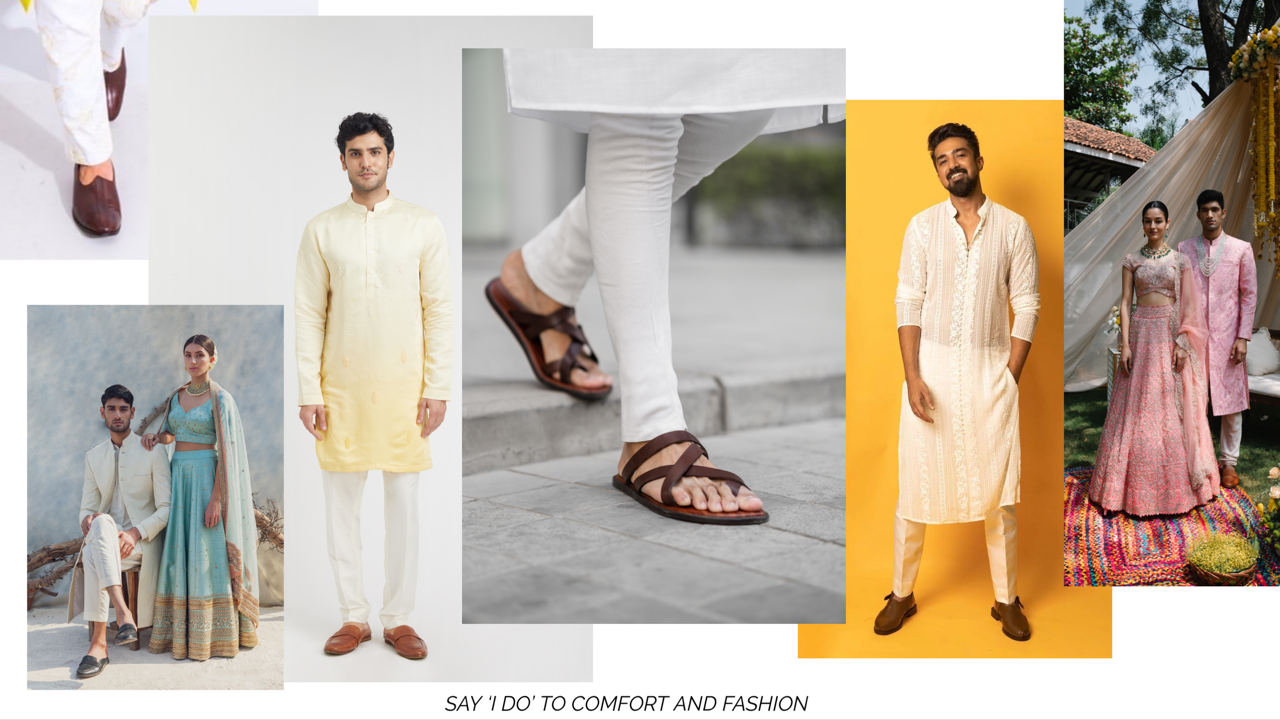
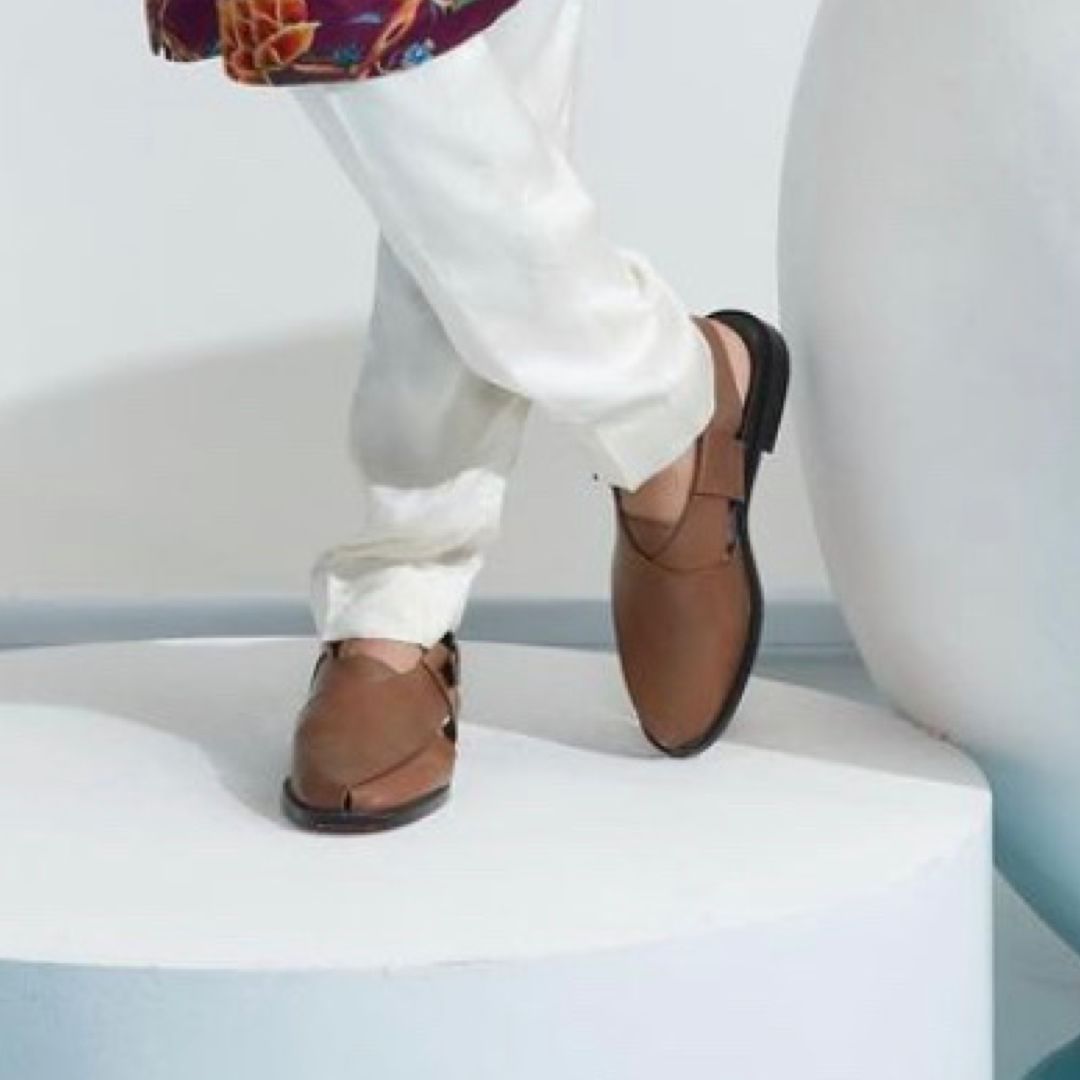
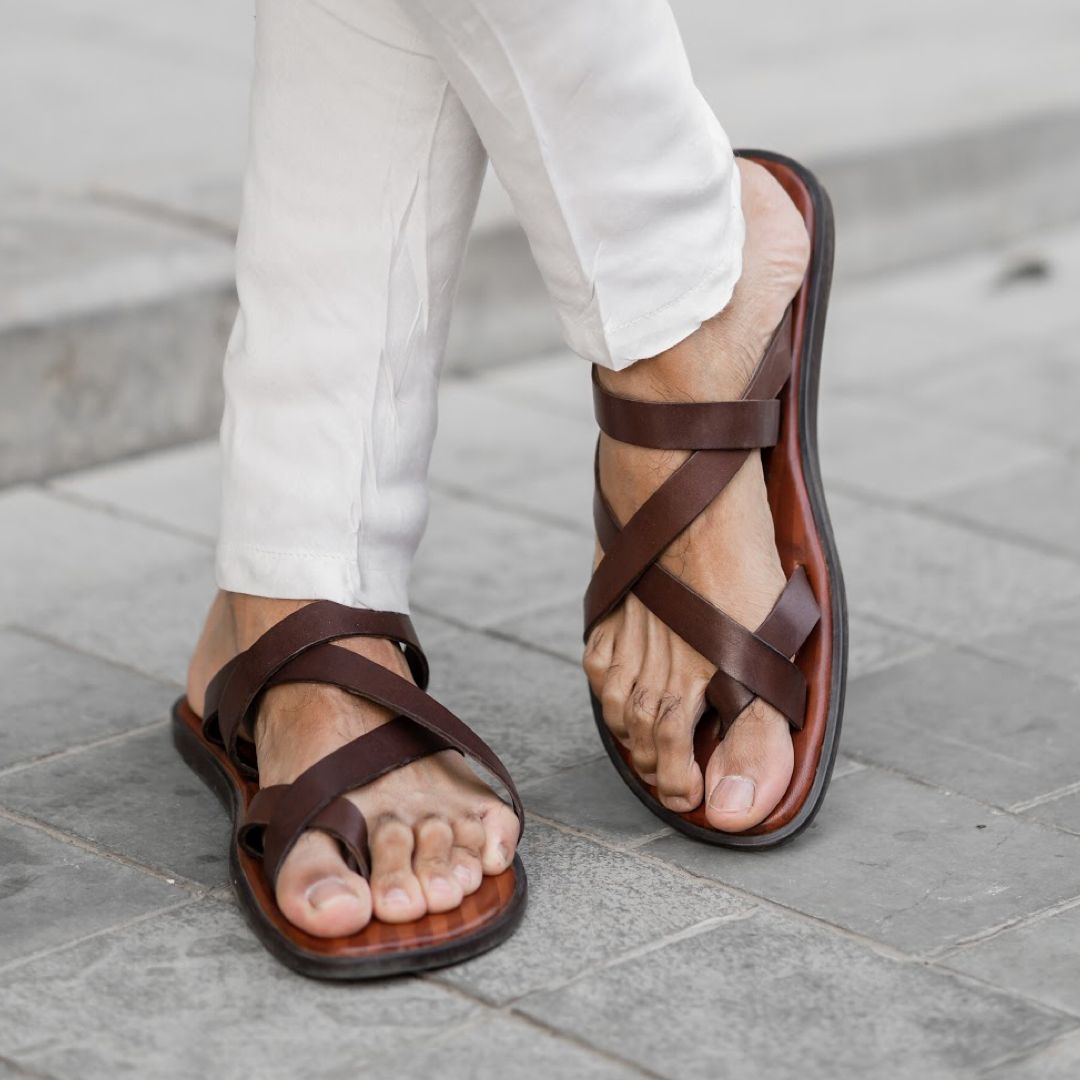
A Peshawari is an open-weave leather sandal with an ankle strap. It originates from the Khyber Pakhtunkhwa region (historically associated with Peshawar) and has been worn with Indian ethnic clothes for centuries. The defining feature of the Peshawari is its open woven leather upper — multiple leather thongs woven across the vamp — and the ankle strap that closes the shoe at the back.
Construction: Full-grain leather woven upper, leather or rubber sole, ankle strap closure.
Origin: Northwestern frontier of the subcontinent — associated with Pashtun tribal dress, Pathani suits, and the sturdy elegance of frontier craftsmanship.
When to wear it: Peshawaris are the most versatile of the three ethnic shoe types. They work across the formality range — from casual weekend wear to formal wedding occasions. The open construction makes them particularly practical for warm-weather and outdoor events.
What to wear them with: Virtually any Indian ethnic outfit — kurta pyjamas, sherwanis, bandhgalas, pathani suits, and even with linen trousers for Indo-western dressing. The Peshawari is the most cross-functional ethnic shoe in the Indian wardrobe.
dmodot makes its Peshawaris — the Pesha Bruno, Pesha Marrone, Pesha Croco, and Pesha Rivetto — in full-grain crust leather with memory cushion insoles and sheep leather lining. They are made to be comfortable for 8 to 12 hours of wearing.
How to Choose Between the Three
For a Punjabi wedding or bhangra function: Jutti.
For a formal Rajasthani-style wedding or traditional ceremony: Mojri.
For anything else — sangeet, destination wedding, casual function, formal occasion in warm weather: Peshawari.
For grooms who want one pair that covers the full wedding programme: Leather Peshawari from dmodot with an ankle strap.
FAQ
Which ethnic shoe is most comfortable for long wedding events?
A leather Peshawari with memory cushion insole — like dmodot's range — is the most comfortable ethnic shoe for extended wearing. The open construction provides ventilation, the ankle strap keeps the shoe secure during movement, and the memory cushion insole provides day-long support. Leather mojris are the second most comfortable. Traditional fabric juttis are the least comfortable for extended wear.
Can I wear a mojri with Western clothes?
Yes, increasingly. Leather mojris in clean, minimal constructions — like dmodot's Ethnico Nero — work well with denim and a kurta or shirt in Indo-western dressing contexts. The key is choosing a mojri with minimal or no surface embellishment, so the leather shape reads as footwear rather than as specifically traditional craft.
Which ethnic shoe is most versatile for the Indian wardrobe?
The Peshawari, by a significant margin. Its open construction works in warm and cool weather, it is comfortable for standing and walking and some dancing, and it works with the full range of Indian ethnic outfits from casual to formal. The dmodot Peshawari range is the starting point recommendation.
Do dmodot Peshawaris and mojris come in large sizes?
Yes. dmodot makes all its ethnic footwear in EU sizes 36 to 50. Men who need size EU 44, 46, 48, or 50 in ethnic footwear — a range almost entirely unavailable from other luxury Indian footwear brands — can order any dmodot ethnic style in their size.
What is the price difference between jutti, mojri, and Peshawari from dmodot?
dmodot makes Peshawaris and leather mojris rather than juttis. The Peshawari range starts at approximately ₹12,000 and the leather mojri range starts at approximately ₹9,000. Both are full-grain leather with memory cushion insoles. Free shipping pan India. Cash on delivery available.