
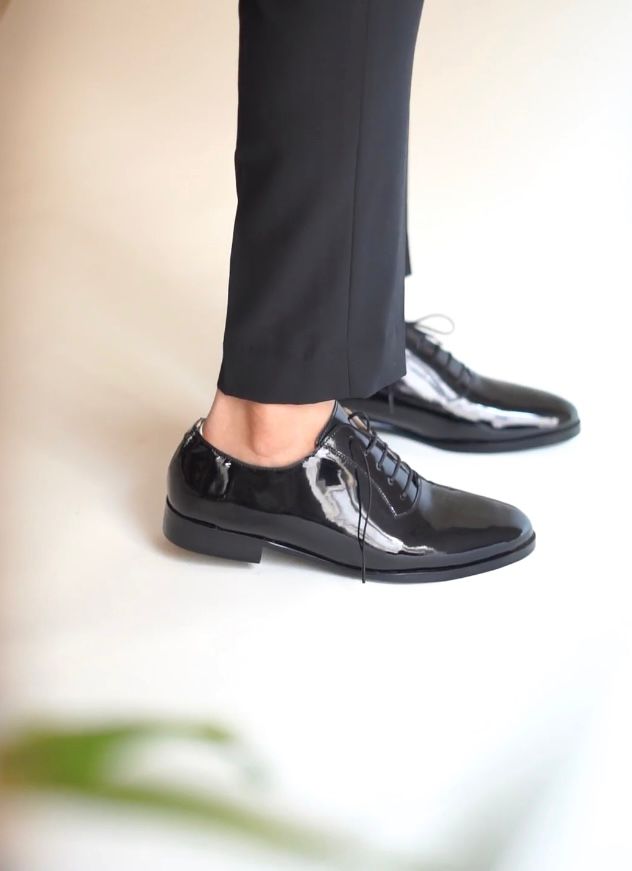
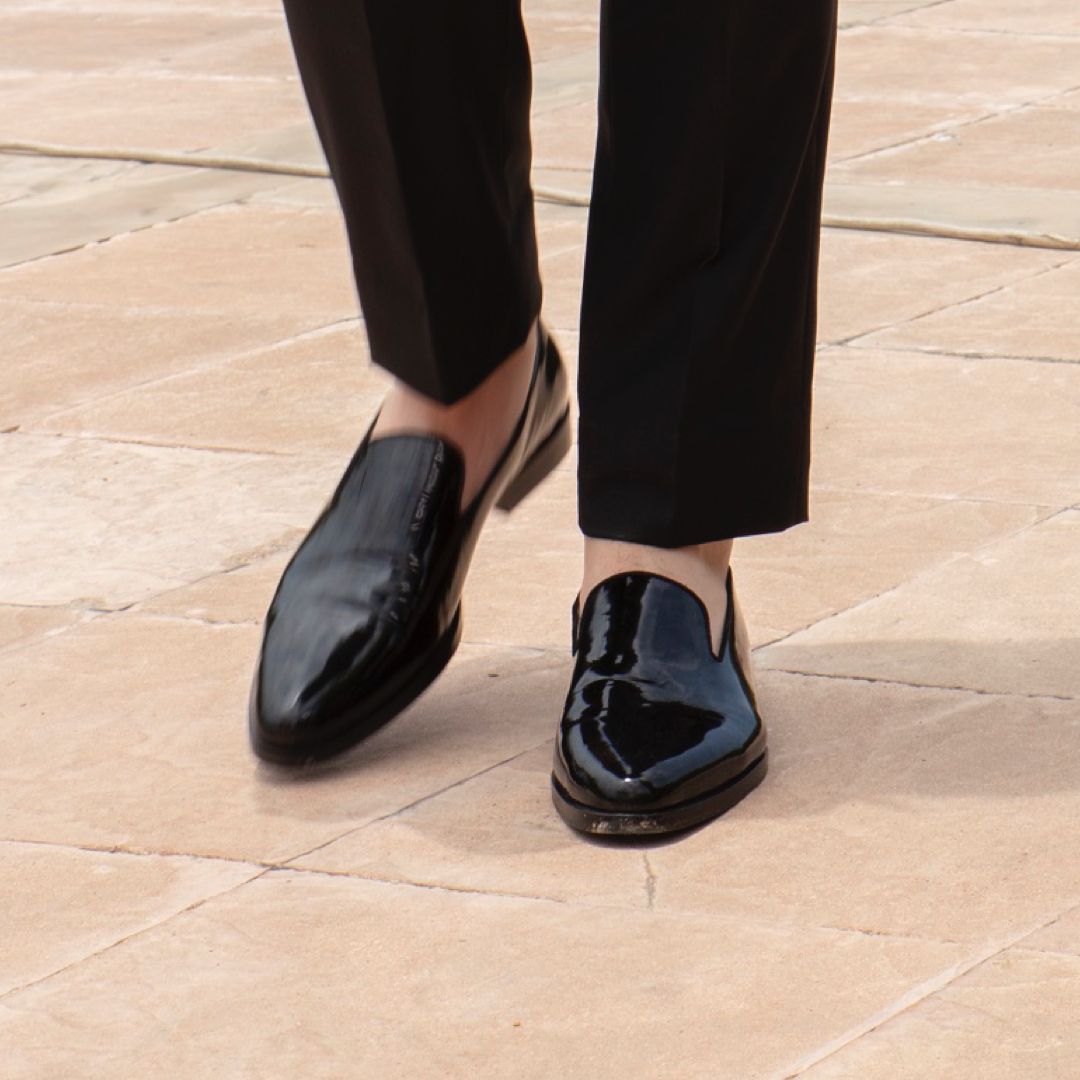

Shoes are an important part of your outfit. You have been wearing shoes your entire life. You have strong opinions about which ones you like and which ones you don't. You can tell a well-made pair from a mediocre one the moment you pick it up. But if someone asked you to point to the vamp, explain what a welt does, or describe the difference between a shank and an insole - you would probably hesitate.
That hesitation is more common than you think. We are sure you are already Googling these terms in another tab!
This is why understanding shoe anatomy - the names of shoe parts and what each one actually does - is equally important. It changes the way you shop, how you care for your shoes, and how you evaluate quality when a salesperson or a product description online is trying to impress you.
In this shoe anatomy guide, let us help you with the innumerable shoe parts names. You’ll get to know what they are called, and why every single one of them matters.
Shoe Parts Name You Should Know
It might just feel there are laces, buckles, and soles - you will be surprised to know the real shoe anatomy! Let’s take you through all the shoe parts' names so that you don’t have to hesitate next time anyone asks you!
#1 The Sole - The Grounding Factor
The sole is the foundation of any shoe. Everything else sits on top of it and is supported by it. A footwear is ultimately only as good as its sole. This is why the sole is where quality separates itself from compromise most clearly. This is like the skeleton in shoe anatomy.
The sole is not one thing - it is a system of three distinct layers, each serving a different purpose.
Outsole - The bottom layer of a sole is the outsole. It is the part that makes contact with the ground. An outsole is usually made out of leather, rubber, or a combination of both.
-
A leather outsole is the mark of a good formal shoe. It has a particular sound on a hard floor, a particular flex as you walk.
-
A rubber outsole provides more grip.
-
TPR (thermoplastic rubber) soles are the contemporary versions of outsoles. They are lightweight, durable, and used extensively in casual leather shoes and sandals where flexibility is more important than formality.
Midsole - The midsole sits between the outsole and insole. It provides the needed cushioning and structural support. Not every shoe comes with a distinct midsole, sometimes it is integrated with the outsole. But in handcrafted, genuine leather footwear, midsoles function as the shock absorption layer.
Insole - Also known as footbeds, the insole is the interior layer that your foot actually rests on. In modern times, a memory foam or cushioned insole has become popular as they contour to the shape of the foot over time. dmodot’s genuine leather shoes come with cushioned insoles for comfort.

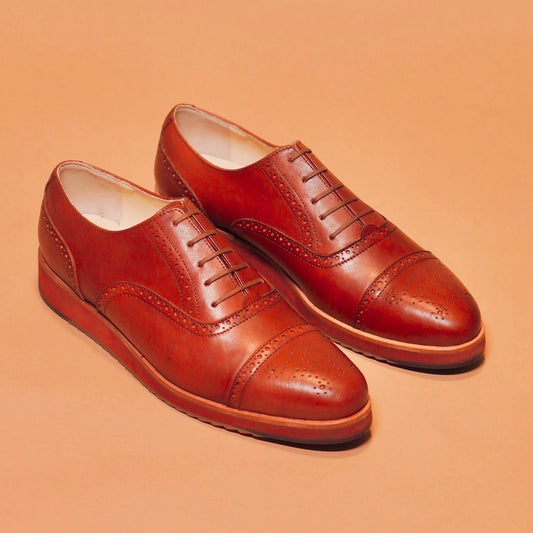
Shop Now: Netto | Dark Tan leather Oxfords with minimal detail
#2 The Shank - The Shoe Part Name Nobody Talks About
While the sole might have sounded familiar, you must be wondering what a shank is! Sandwiched between the insole and outsole, running along the arch of the shoe, is the shank. It is a narrow piece of material, traditionally steel or fibreglass, that provides structural rigidity to the shoe's arch. It is hardly ever visible, but footwear without a proper shank will eventually collapse in the arch, losing its shape and its support simultaneously.
#3 The Upper - Everything Above the Sole
This is what you see first! The upper. It is everything visible above the sole - the leather, the stitching, the eyelets, the tongue. Yes, the upper decides the kind of shoe it is. And within the upper, there are several distinct components, each with a name and a function.
The Vamp
The front section of the upper that covers the toes and the ball of the foot. In an Oxford or Derby, the vamp is where the toe cap sits and where the lacing system begins.
In an Oxford shoe or Derby, the vamp is where the toe cap sits and where the lacing system begins. The shape of the vamp - how pointed, how rounded, how elongated - determines much of a shoe's visual character.
The Toe Cap
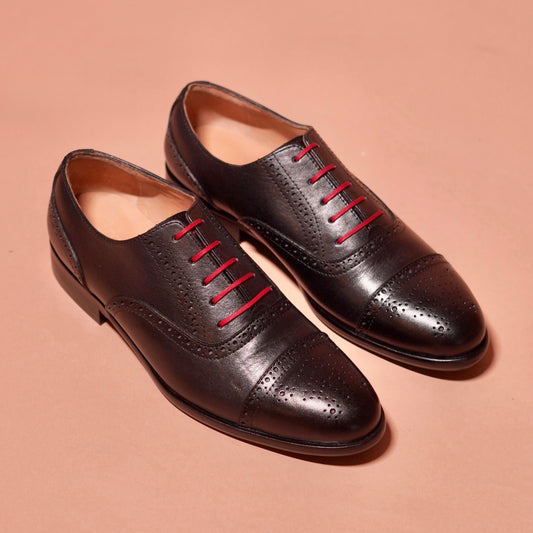
The Toe cap or cap toe is the additional layer of leather stitched across the front of the vamp at the toe. It is done for both structural and aesthetic purposes. Structurally, it reinforces the toe area. Aesthetically, it creates the clean horizontal line that defines one of the most recognisable formal shoe silhouettes.
A cap-toe Oxford is the most correct formal shoe a man can own precisely because of the precision that the toe cap signals.

Shop Now: Assasino | Classic black cap-toe Oxford
The Quarter
These are the rear sides of the upper. The quarter contains panels that wrap around the heel on either side.
In a Derby, the quarters are stitched on top of the vamp, creating the open-lacing system. In an Oxford shoe, the quarters are stitched beneath the vamp, creating the closed-lacing system that makes it more formal. The difference is in the construction, where the quarter meets the vamp. And this is what tells you the distinction between a Derby and an Oxford.

Shop Now: Chocro | Dual-tone tan handmade derby with an extra cushioned insole
The Counter
This is a stiffened piece built into the heel area of the upper, between the outer leather and the lining. Its purpose is to maintain the heel's shape. A well-made counter is firm but not rigid, supporting the heel without gripping it uncomfortably.
The Tongue
The flap of leather that sits beneath the lacing, protecting the top of the foot from the pressure of the laces, is the tongue of a shoe.
The tongue in formal shoes is relatively thin and flat, but plays an important role in men’s sneakers. It is often padded in sneakers.
#4 The Lacing System - It’s More Technical Than It Looks
Formal shoes and laces have a love affair that cannot be missed. The lacing system of a shoe is where much of its formality is determined, and it has its own shoe anatomy. Let us know about this shoe parts name better.
Eyelets
These little holes on the vamp let the lace pass through. In traditional formal shoes, eyelets are either punched directly into the leather or reinforced with metal grommets.
You will find eyelets in almost all kinds of formal shoes and tuxedo shoes.
The number of eyelets and their spacing affect both the look and the fit of the shoe. More eyelets mean more adjustment points, which means a more precisely fitted shoe.
Broguing
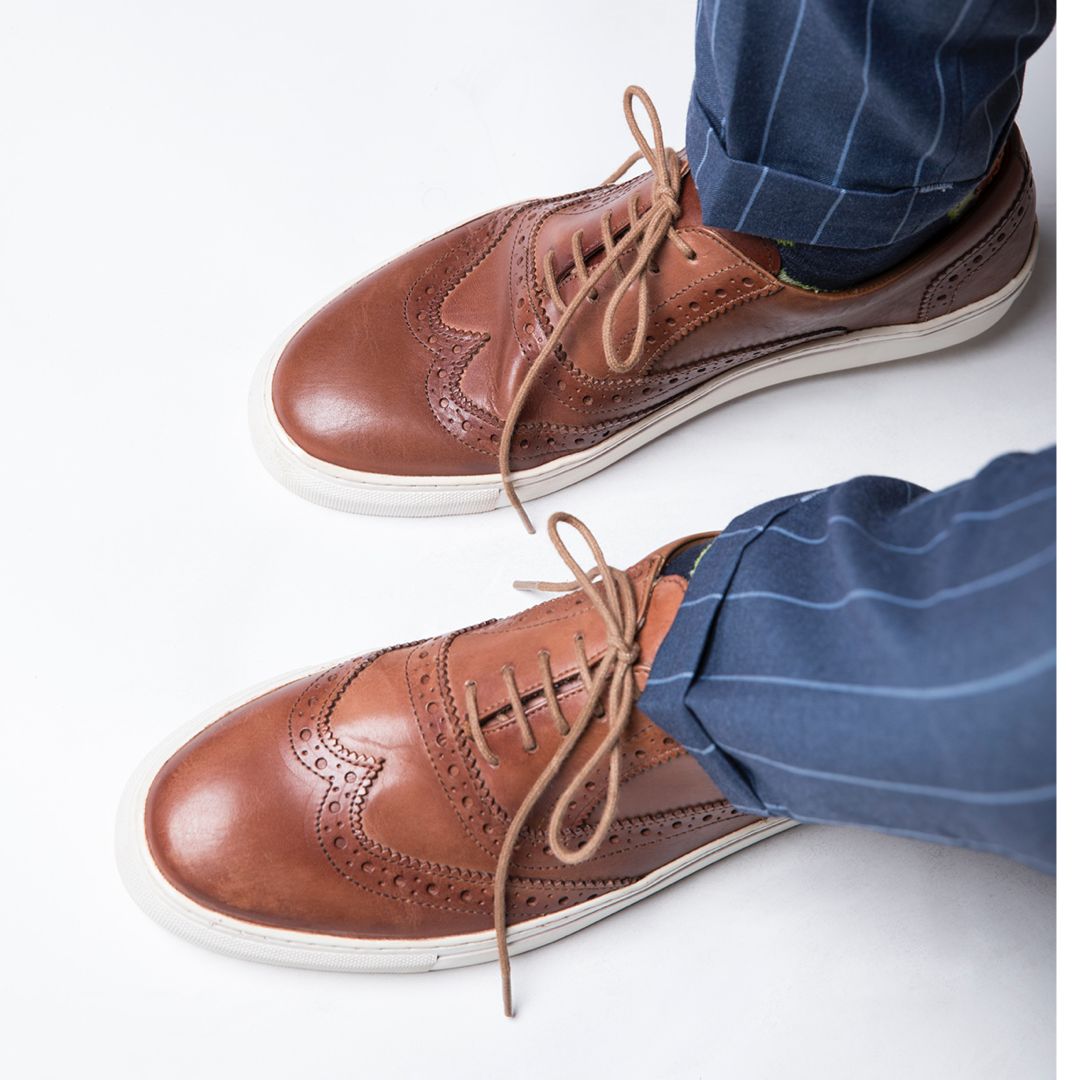
These are small punched holes and serrated edges that appear on brogues. They are technically a decorative element applied around the eyelets, toe cap, and seams, but function as a signature style - slightly relaxed, perfect for smart dressing.

Shop Now: Cobalto | Classic deep blue leather brogue sneaker
#5 The Welt - The Most Important Seam in Shoemaking
The welt is a strip of leather stitched around the perimeter of the shoe, connecting the upper to the sole. It is, in many ways, the defining element of a well-constructed shoe. The welt is the clearest indicator of how a shoe was made and how long it will last.
The Goodyear Welt
In a Goodyear welted shoe - the construction method used in traditional high-quality footwear - the welt is stitched to both the upper and the insole in a separate operation before being stitched to the outsole. This double-stitching creates a shoe that can be resoled indefinitely. A welted shoe will last you decades when taken care.

Shop Now: Sprazzo Welto Chocro | Brown goodyear-welted leather boots
The Blake Construction
In a Blake Construction seam, a single stitch connects the insole, welt and outsole directly. It creates a sleeker, lower-profile sole with more ground feel, preferred for dressy shoes as seen on dmodot’s Capto Tesso Bruno.

Shop Now: Capto Tesso Bruno | Tan dual-toned woven leather Oxfords
#6 The Heel - One That Gives Structure, Height, and Sound
The heel of a footwear is architectural and often more complex than it appears. It is not there just to add height to the footwear. These shoe parts names are rarely known to man, but here we are decoding the shoe anatomy.
The Heel Stack
It refers to the layers of material - leather, rubber, or TPR - that build up the height of the heel. In a formal leather shoe, the heel stack is traditionally made from stacked leather lifts. Each layer adds height, firmness, and the characteristic sound of a leather heel on a hard floor. The heel stack sound defines authority when you walk.
The Top Lift
It is the very bottom layer of the heel. This part makes direct contact with the ground and therefore wears fastest.
The Seat
It is the interior curve of the heel counter where the heel of the foot sits. The seat's shape and the softness of the material at this point determine how comfortable the shoe feels at the back of the foot.
#7 The Lining - The Comfort Conversation Between Shoe and Foot
The lining in shoe anatomy works like a lining in clothing. The lining is the interior surface of the shoe. In genuine leather luxury footwear, the lining is leather or a soft natural material. Sheep leather lining, used across dmodot's range, is particularly valued for its softness against the foot.
Sheep leather lining has a unique ability to regulate temperature. They are cooler in heat, warmer in cold - more naturally than synthetic alternatives. Good sheep leather lining also wicks moisture away from the foot.
Why Shoe Anatomy Actually Matters
Knowing shoe parts names is not about impressing anyone in a conversation. Though it is inevitable that you are going one step forward in becoming the footwear fashion guru after this shoe anatomy guide. Understanding the shoe anatomy is about making better decisions.
Now you know what to check while shopping for formal footwear for men. When a shoe description mentions a memory cushion insole, you now know exactly where that is and what it does. When a brand specifies Goodyear welt construction, you understand how it can last twenty years.
When you read that a shoe uses full-grain crust leather on the upper, you know that the most important visible component is made from the best available material.
At dmodot, every part of every shoe is made with the intention that the person wearing it knows exactly what they have. Handcrafted genuine leather, memory cushion insoles, quality welting, sheep leather lining - each component chosen because it contributes something real to the shoe's performance and longevity.